
Racing with Greatness: Usain Bolt’s Legacy and Reflections
Racing against Usain Bolt wasn’t just about speed; it was a privilege. For over a decade, lining up beside him meant being in the presence of greatness. Even if you finished second, you were part of something monumental. With world records in the 100 meters (9.58 seconds) and 200 meters (19.19 seconds), plus eight Olympic gold medals, every race alongside Bolt became a moment etched in history.
Recently, Bolt opened up about his career in a candid conversation on Puma’s Go Wild podcast with Colin Jackson. He admitted that if he had known how much he would miss competing, he might have extended his career. “I would have probably gone four more years. Maybe. And say, you know what? Let’s try for Tokyo,” he shared. This revelation surprised many fans, highlighting a side of the sprinting legend that few had seen.
For athletes, sharing the track with Bolt meant joining a piece of sporting immortality. He wasn’t just winning races; he was electrifying crowds and setting the benchmark for future sprinters. Yet, years after stepping away from the track, Bolt revealed a quiet regret: he wished he could have competed in the Tokyo Olympics. “I don’t miss the training, but I do miss the competition,” he confessed, reflecting on the thrill of high-stakes races.
Even today, Bolt’s name is spoken with awe. His legacy serves as the gold standard for sprinters worldwide. But behind the accolades lies a human truth: walking away from greatness doesn’t mean you stop longing for it. “If I knew what my after-track life was going to be like,” he said, “I would have retired ten years earlier.” His words resonate with anyone who has ever had to let go of something they loved.
Bolt’s reflections aren’t just about regret; they reveal the ache of knowing there was more to give. “Because I dominated so much, I was like, I don’t need to go. But… if I knew I was going to miss it so much, I would have said, you know what, let me go four more years,” he admitted. This vulnerability from the fastest man alive serves as a reminder that even legends look back, wondering, “What if?”
The Untold Layers of Usain Bolt’s Sprinting Legacy
Bolt’s career wasn’t just a highlight reel of records and medals; it was also marked by controversy. After his double-gold triumph in the 2008 Beijing Olympics, his exuberant celebrations drew criticism. Then-IOC president Jacques Rogge remarked, “I think he should show more respect for his competitors.” Despite shattering records, Bolt’s electric persona often clashed with traditional expectations.
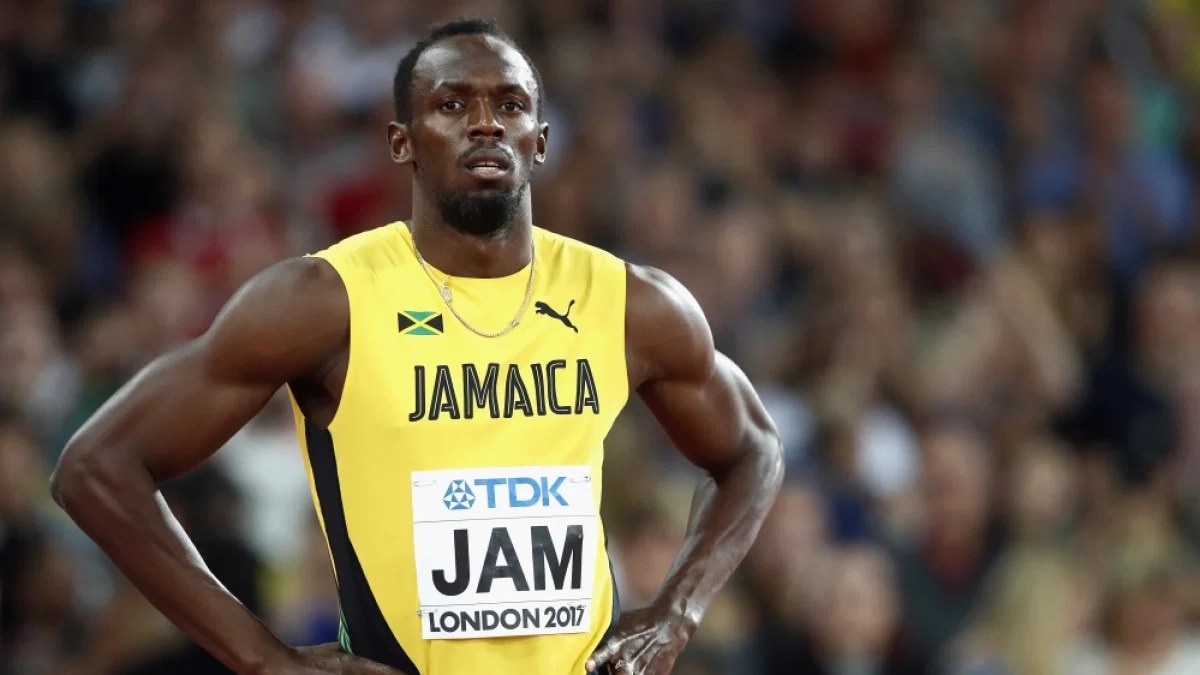
His final race in 2017 at the World Athletics Championships in London ended in heartbreak. During the 4x100m relay, Bolt collapsed, clutching his hamstring. Rumors swirled that he had faked the injury, a claim that deeply insulted him. For an athlete who built his legacy on finishing strong, defending his character became just as important as defending his titles.
Yet, through it all, Bolt remained human. He once confessed that he believed only one man could beat him: fellow Jamaican sprinter Asafa Powell. “Asafa, you’re the only man in the world I think can beat me,” he reportedly told Powell. This acknowledgment of a worthy rival adds a layer of humility to Bolt’s mythos, reminding us that even the greatest have moments of doubt.
As Bolt reflects on his career, one can’t help but wonder: What would he have achieved if he had raced just a little longer? Would the world have seen even more records shattered? The echoes of the crowd still resonate in his memory, and the legacy of Usain Bolt continues to inspire generations.