
‘We are on a road to nowhere, Come on inside’
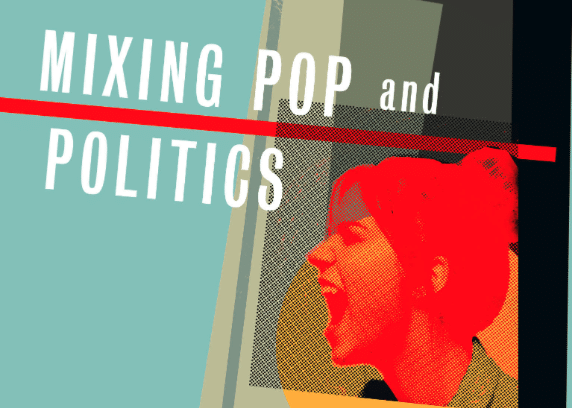
In his forthcoming book, Mixing Pop and Politics: A Marxist History of Popular Music, Toby Manning embarks on a journey through the intertwined realms of music and socio-political history. This 567-page exploration, set to be published by Repeater Books in 2024, challenges the dominant narratives that have shaped our understanding of popular music and its role in society. Manning argues that the popular history of the post-war period is often written by the victors, leading to a sanitized version of events that overlooks the struggles and potential for change. Instead of viewing music merely as a commodity, he invites readers to see it as a dynamic force that reflects and shapes the collective consciousness.
The Illusion of Collective Amnesia
Manning opens his discourse by referencing Francois Hartog’s notion of "collective amnesia," which suggests that the mainstream historical narrative often strips away the complexities of struggle and resistance. This results in a portrayal of music as a mere product of consumer capitalism, where the masses are reduced to passive consumers. Manning seeks to dismantle this narrative, presenting music as a dialectical struggle between dominant ideologies and popular imaginations. He posits that music is in a state of "fluid movement," serving as a resource of hope that can inspire action and change in the present.
A New Way to Periodize History
One of the standout features of Manning’s book is his innovative approach to periodization. Rather than adhering to rigid decades or longer time spans, he organizes his chapters around significant musical and historical breaks. This method allows readers to engage with the fluidity of popular culture and history, moving seamlessly from the rock’n’roll rebellion of the late 1950s to the punk and disco movements of the late 1970s and early 1980s. Each chapter serves as a microcosm of cultural shifts, reflecting the oscillation between counterculture and reaction, hope and resignation.
The 1950s: A Time of Rebellion
In popular discourse, the 1950s are often romanticized as a period of lost innocence, epitomized by nostalgic portrayals in shows like Happy Days and films like American Graffiti. However, Manning challenges this sanitized view, arguing that if the era was as idyllic as portrayed, the emergence of rock’n’roll would be inexplicable. He highlights the significance of artists like Little Richard and Chuck Berry, who broke through racial barriers and challenged societal norms with their music. Songs like "Tutti Frutti" and "Johnny B. Goode" not only entertained but also served as powerful commentaries on the realities of race, class, and sexuality in America.
The Fashion of Rebellion
Manning also delves into the fashion of the era, noting how youth culture rejected the buttoned-down aesthetics of their parents in favor of more expressive styles. Denim and plaid became symbols of rebellion, challenging the prevailing class hierarchies. However, this spirit of defiance was quickly co-opted by capitalism, as major labels sought to monetize the energy of rock’n’roll. The author draws parallels with the advertising industry, which transformed discontent into consumerism, ultimately diluting the revolutionary potential of the music.
The 1980s: A Shift Towards Individualism
As Manning transitions into the 1980s, he examines how the era is often viewed as the culmination of social democracy’s failures, giving rise to a culture of individualism and corporate greed. The decade is characterized by a sense of optimism, epitomized by songs like Survivor’s "Eye of the Tiger" and Madonna’s "Holiday." Yet, beneath this veneer of positivity, Manning uncovers a rich tapestry of dissent and critique. Artists like The Jam and Grandmaster Flash used their platforms to voice the frustrations of the working class, highlighting the stark realities of life in a society increasingly driven by individual success.
The Power of Music as Protest
Manning emphasizes that music does not exist in a vacuum; it is a reflection of its historical context. He argues that popular music serves as a collective memory, offering a lens through which we can understand the struggles and aspirations of different eras. From Public Enemy’s revolutionary anthems to the utopian visions of Beloved, Manning illustrates how music can evoke feelings of hope and inspire collective action. This perspective challenges the notion that history is a linear progression, suggesting instead that it is a complex interplay of forces that can be influenced by cultural expressions.
The Role of Music in Shaping History
Throughout Mixing Pop and Politics, Manning invites readers to reconsider their understanding of popular music as a mere backdrop to historical events. Instead, he posits that music is an active participant in shaping societal narratives. By examining the interplay between music and politics, he reveals how artists have historically used their platforms to challenge the status quo and advocate for change. This exploration not only enriches our understanding of music but also underscores its potential as a catalyst for social transformation.
A Call to Engage with History
Manning’s work is not just an academic exercise; it is a call to engage with history in a more nuanced way. By challenging the dominant narratives that have shaped our understanding of popular music, he encourages readers to seek out the voices of dissent that have often been marginalized. While some may quibble with his musical selections or theoretical frameworks, the richness of his analysis invites readers to reflect on their own perspectives and consider the broader implications of music in society.
In a world where music surrounds us in myriad forms, Manning’s Mixing Pop and Politics serves as a vital reminder of the power of cultural expression to reflect, challenge, and inspire. It is a history worth telling, one that resonates with the struggles and aspirations of people across generations.